


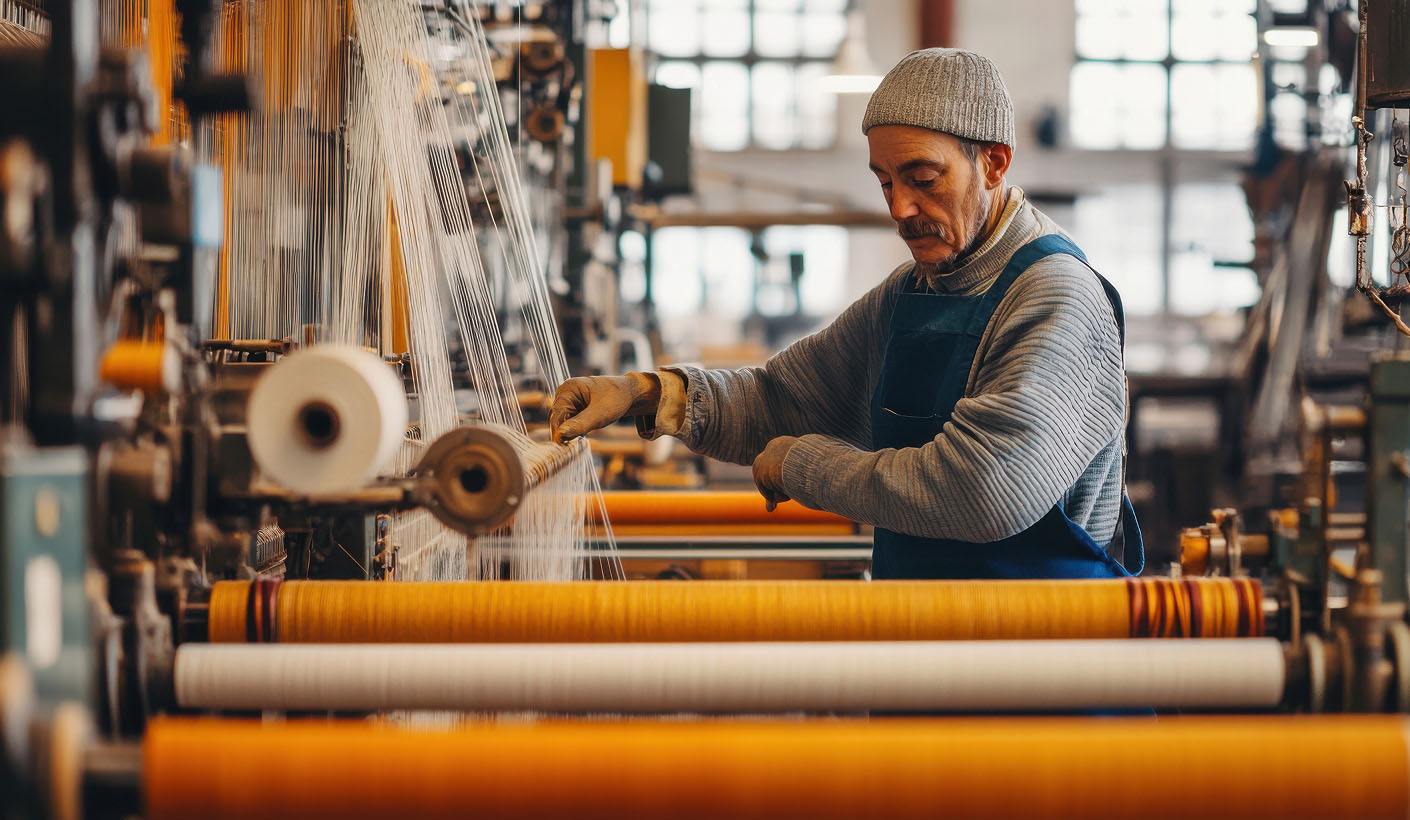

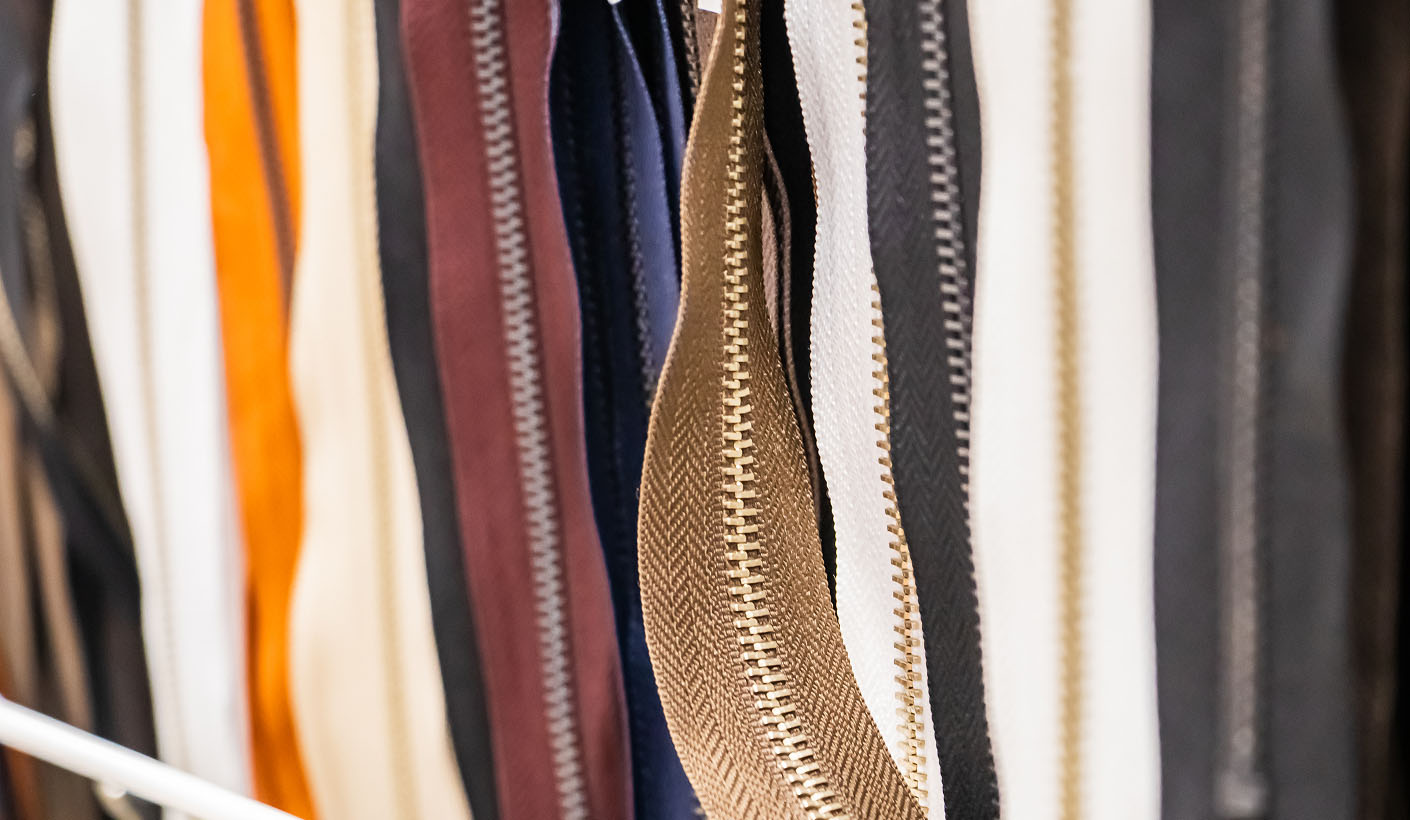
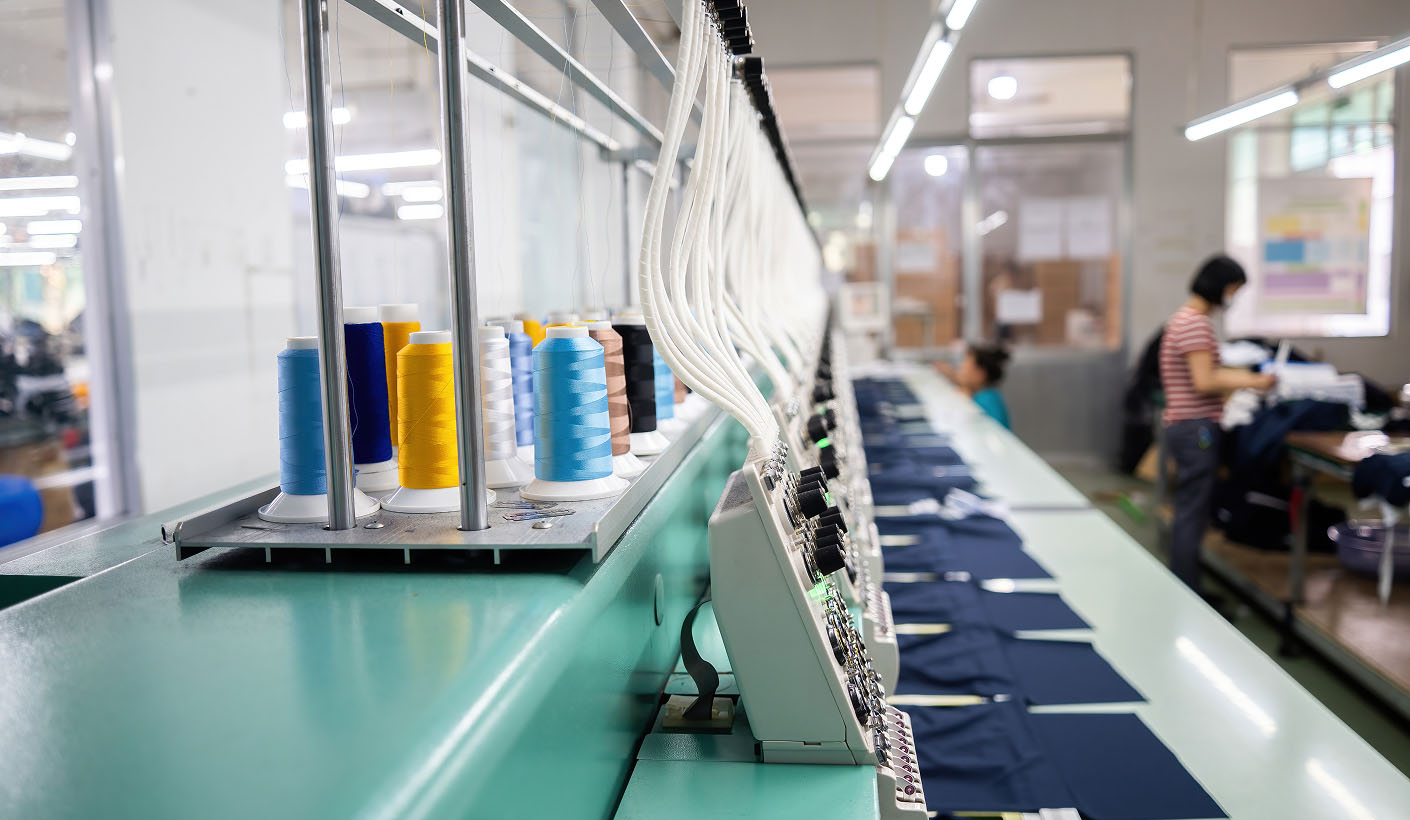

This is the vital stage where we apply thermal energy and physical tension to control the fabric’s structure permanently. Once the fabric is clean from Wet Processing, Mechanical and Dimensional Stabilization is essential to ensure it meets the garment industry’s most critical requirements: consistent width, uniform weight, and guaranteed minimal shrinkage after washing. This stage prevents problems like garment twisting and size variation.
Singeing
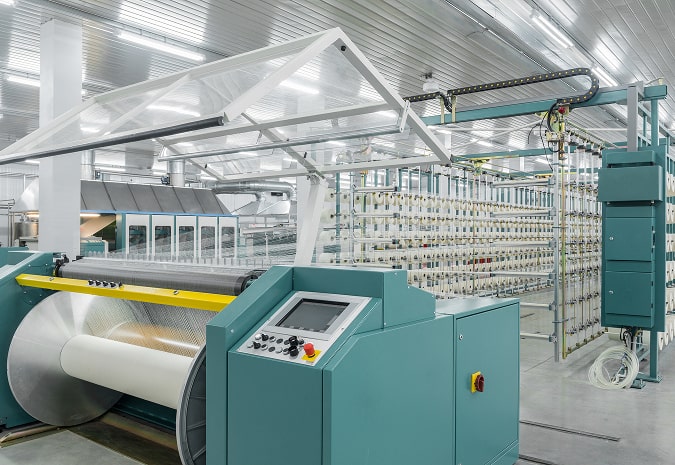
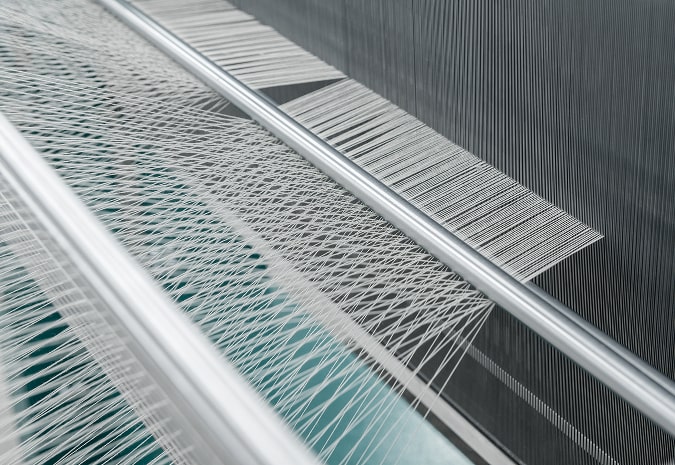
Singeing is not just ‘burning off hair’—it’s the critical first step in achieving a flawless, ultra-smooth surface that defines a premium product.it is a critical pre-treatment process where the fabric surface is quickly passed through a controlled flame or over a heated metal plate. The sole purpose is to remove or burn off the tiny, protruding fiber ends and fuzz (often called “hairiness” or “pilling risk”) that naturally occur on the yarn surface after weaving
Less breathable than natural fibers
High durability and resistance to wear and tear
Cost-effective to produce in large quantities
Product Design & Development
Maecenas volutpat blandit aliquam etiam erat
professional quality inspection teams
Easy care and maintenance
Derived from non-renewable fossil fuels
Stenter setting
Technical Detail:
The fabric travels through a sequence of enclosed, high-temperature chambers where hot air is circulated efficiently which Removes moisture rapidly and uniformly, stabilizing the fiber structure against future dimensional changesCore Functions of Stenter Setting Final Width Setting:
The stenter ensures the fabric is set to the client’s required commercial width (e.g., 60 inches). This is crucial for cutting room efficiency, as garment manufacturers rely on this dimension being exact for optimal fabric utilization.Moisture and Weight Control:
It dries the fabric down to a specific, final moisture content. This stabilizes the weight per square meter (GSM), a key metric for inventory and garment costing.Curing of Finishes:
The heat applied in the stenter chambers is used to cure or activate the chemical finishes applied in the pad mangle. This ensures that functional finishes (like water repellent or soil release agents) chemically bond to the fiber for long-term durability.Why Stenter Precision Matters to You Zero Waste in Cutting:
By guaranteeing consistent, uniform fabric width, we ensure maximum yield and minimize off-cuts for your cutting department.Predictable Quality:
The combination of controlled drying and curing locks in the color, hand-feel, and dimensional stability, ensuring your final product consistently meets brand specifications.Ready-to-Use Fabric:
The fabric leaves the stenter at the correct width, moisture, and with the functional finishes fully cured, making it ready immediately for the next step: shrinkage control (Sanforizing) or direct despatch.Sanforizing / Zero-Zero
This is the final seal of quality, assuring your customers that the garment size they buy is the size they keep. After the fabric has been dried and set on the Stenter, it still holds latent mechanical tension from being stretched during previous stages. The Sanforizing or Zero-Zero process uses mechanical force to remove this tension, ensuring the textile will not shrink further when washed by the consumer.
Why Sanforizing is Critical for Garment Manufacturing
Zero Returns Risk:
We guarantee a consistently low residual shrinkage percentage (e.g., typically under 1-3%), eliminating a primary cause of consumer returns and chargebacksMaximized Yield:
Delivers a stable, ready-to-cut textile that maximizes fabric utilization on your cutting tables and minimizes off-cut waste.Market Access:
Provides certified, stable textiles that meet the stringent dimensional stability and quality benchmarks of international brands and retailers.Raising (Napping)
How We Build Market Value Into Your Fabric Instead of relying solely on heavy fiber content for warmth, our Napping service uses mechanical precision to engineer softness and thermal capacity directly into the surface layer.
Raising is aggressive. How do you guarantee the process won't degrade the fabric's tensile strength or make it prone to tearing?
Our Napping machines operate under highly regulated speed and tension controls specific to the fiber content (e.g., cotton vs. polyester blend). We calibrate the angle and pressure of the raising wires to minimize fiber breakage, focusing only on lifting surface fibers. Post-raising, the fabric is often reinforced with specialized softeners that add back lubrication, ensuring that the finished textile meets or exceeds specified tear and burst strength thresholds.
After a few washes, will the beautiful nap survive, or will it shed, pill, and look worn out?
Pre-Treatment: We ensure thorough Singeing is performed before Napping to remove any unstable, loose fiber ends that would definitely turn into pills later.
Fiber Lubrication: We utilize silicone-based Softener Applications post-raising to gently bind and anchor the raised fibers to the underlying structure. This stabilizes the nap layer, maximizing its longevity and aesthetic retention through repeated consumer laundering.
Won't the added volume from the nap skew my cutting patterns or cause unpredictable shrinkage?
The fabric width is precisely set for your cutting room.
The volume added by the nap is reflected accurately in the final Weight/GSM.
The textile delivers the guaranteed low residual shrinkage required for the garment to hold its size and shape.
I need a very specific hand-feel—like a short, dense flannel nap, not a lofty fleece. Can you control the texture?
Wire Gauge: Using finer or coarser wires for soft vs. heavy-duty nap.
Passes/Pressure: Controlling the number of times the fabric contacts the wires to achieve the exact height and density. This allows us to consistently deliver everything from a premium Sueded texture to a dense Fleece finish. We provide samples calibrated to your target aesthetic.
Since Napping is mechanical, is there a risk of metal filings or impurities contaminating the finished fabric?
Our process includes strict safety protocols. The fabric pathway immediately following the Napping machine is equipped with magnetic filtration and high-power vacuum extraction. This ensures any micro-debris generated during the raising process is immediately removed, guaranteeing the fabric delivered to you is clean and safe for final garment construction
Brushing
Uses :
Clears the fabric surface of any leftover short fibers or debris missed in earlier stages. Depending on its placement, it either aids in purification or acts as a final textural modification step, contributing to the final hand-feel.Peach Finishing
Mechanism:
The fabric passes under minimal tension over precision-engineered rollers covered with fine-grit emery. The rotational speed and contact pressure are calibrated to the fiber typeKey Benefits of Precision Emerising
Unmatched Hand-Feel
Rich, Matte Aesthetic
Versatile Fiber Suitability
Since this is an abrasive process, how do you prevent the fabric from being damaged, weakened, or thinned?
We operate the Emerising equipment at extremely low, precise contact pressures, using only high-grit abrasives to target fiber tips, not the yarn body. Our machines run with tension sensors that prevent unnecessary stress. Furthermore, we monitor fabric weight (GSM) before and after the process. The resulting nap is a surface effect that enhances the fabric feel while preserving its core tensile and tear strength, providing the aesthetic without the structural risk.
How do you ensure the velvet surface is perfectly uniform across the whole width without streaks, patches, or uneven density?
Uniformity begins with excellent preparation. Our process mandates:
Perfect Singeing: Eliminates long, unstable hairs that would create patchy streaks.
Controlled Tension: The fabric tension on the Emerising rollers is maintained rigidly to ensure every square inch receives identical abrasion force.
This multi-point control ensures the resulting short-pile nap is flawlessly dense and uniform from selvedge to selvedge.
The peach finish feels great initially, but will the softness last, or will the nap disappear after the consumer washes the garment a few times?
The durability of the hand-feel is locked in after the abrasion. We follow Emerising with a highly durable, specialized Silicone Softener Application. This chemical treatment lubricates and binds the newly exposed fiber ends, anchoring the nap and protecting the surface. This guarantees the fabric retains its luxurious feel and bounce through repeated home laundering cycles.
I use deep, dark colors. How will the Peaching process affect the final shade? Will the fabric look faded?
The Peaching process actually enhances color richness. By creating a micro-pile surface, the light is diffused (scattered) rather than reflected, giving the fabric a desirable matte aesthetic and a perception of increased color depth and saturation. We recommend adjusting dye formulas slightly pre-treatment to compensate for the slight visual whitening effect of the raised fibers, guaranteeing the final shade matches your specification.
If you are abrading the fabric, will this throw off my dimensional stability for cutting?
We recognize that abrasion can temporarily destabilize the fabric. Therefore, Emerising is always an intermediate step. The fabric proceeds immediately to:
Stenter Setting: Re-sets the precise width and eliminates any skew.
Sanforizing: Compresses the textile to guarantee minimal residual shrinkage.
This sequence ensures the fabric you receive is not only luxuriously soft but also dimensionally certified and ready for high-precision cutting.
Sueding
Peach Finishing, often interchangeably called Sueding, is a sophisticated mechanical finishing process used to achieve a uniquely soft, short-pile, velvety surface texture on the fabric. It is a refinement technique that provides a luxurious hand-feel highly valued in premium apparel and home textiles.
Mechanish : Unlike aggressive Napping, Peaching uses a series of abrasive rollers covered with fine emery paper or carbon fiber. The fabric is brought into very light, controlled contact with these rotating surfaces.
Key Benefits of sueding
Supreme Hand-Feel
Rich Color Depth
Improved Drape
(What is the actual difference in the final feel? Does Carbon Fiber give me a better result than traditional Emery?
Emery Paper is a traditional abrasive that provides a shorter, crisper, and generally more aggressive suede finish.
Carbon Fiber Brushing is a modern, non-abrasive technique that utilizes fine, flexible filaments. This method creates a denser, finer, and more uniform velvet or peach skin texture, achieving superior softness and drape without the harshness of paper. We select Carbon Fiber when the client requires the ultimate in luxurious hand-feel.
Does the abrasive material leave any residue or micro-dust that could contaminate the fabric before dispatch?
Emery Paper generates fine dust and can leave minute residue from the paper backing itself, which necessitates more aggressive post-cleaning.
Carbon Fiber operates much cleaner. The controlled flexing action generates significantly less fine debris. This results in a cleaner processing environment and minimizes the risk of micro-contamination, ensuring your fabric is as pure as possible for garment construction.